
Why You Second-Guess Yourself When You're Stressed
Have you ever walked away from a conversation and then later found yourself replaying it over and over in your mind?
Did I say that the wrong way?
Did that come out differently than I meant it?
Maybe I should have explained that better.
The more you think about it, the more uncertain you start to feel. What seemed fine in the moment suddenly feels questionable, so you replay the conversation again. And maybe again.
This kind of second-guessing is more common than people realize. And often, it’s a stress response, not a sign that something is wrong with you or that you can’t trust yourself.
What’s actually happening in your brain under stress

When you’re under stress, your brain starts working differently.
Instead of helping you feel clear and confident, it starts scanning for possible problems. The brain becomes more alert to potential mistakes, misunderstandings, or things that might have gone wrong.
This makes sense when you understand a little about how the brain works under stress. Stress activates parts of the brain that are designed to protect you. Those systems scan for problems and try to anticipate threats.
That’s helpful when you’re dealing with real danger. But in everyday situations, it can lead the mind to keep searching for mistakes that may not actually be there.
So when you replay a conversation over and over, your brain isn’t necessarily revealing something important. Often, it’s simply doing what stressed brains are wired to do: scan, review, and double-check for possible problems.
This is one way a stress loop can begin:
Stress → Doubt → Mental Replay → More Stress
And once that cycle starts, the mind keeps trying to solve the situation by thinking about it again.
What many people assume it means

When people don’t understand what’s happening, they often come to a very different conclusion. Instead of recognizing a stress response, they assume the problem is themselves.
They start thinking things like:
Why do I overthink everything?
Why can’t I just let things go?
Why do I always question myself afterward?
Over time, this kind of second-guessing can quietly chip away at self-trust. The more the mind replays and analyzes, the more it begins to feel like you can’t rely on your own judgment.
But often, the real issue isn’t a lack of confidence or a character flaw. It’s that your mind and body have slipped into a stress loop.
How the stress loop works

This is where the whole thing starts feeding itself.
When stress is active, the mind starts looking for problems. That can trigger second-guessing, which leads to more thinking and mental replay.
You replay the conversation, searching for what might have gone wrong.
Did I explain that clearly?
Did they misunderstand what I meant?
Should I have said something differently?
Each pass through the conversation can make the situation feel more uncertain, and that uncertainty creates even more stress. Before long, the mind is stuck in a loop that keeps feeding itself.
Noticing the loop sooner
Once you understand this pattern, a different kind of question becomes possible. Instead of asking yourself why you’re overthinking, you can begin with something simpler:
What’s happening in my body right now?
Often, the mind is still busy replaying the situation, but the body has already been signaling stress for a while.
You might notice tightness in your chest or stomach. Your jaw may be clenched. Your breathing may feel a little shallow.
Sometimes there’s a subtle sense of urgency, a feeling that you need to solve the situation immediately. These signals are easy to overlook, especially when the mind is focused on analyzing what happened.
But they’re often the earliest clues that your body has shifted into a stress response. And noticing those signals earlier can make it easier to step out of the loop before the mind spins for hours.

Read More About Stress Responses: Calm Is a Return Skill (Not a Personality Trait)
Returning to steadiness
The goal isn’t to eliminate second-guessing completely. Moments of uncertainty are part of being human. Everyone replays a conversation or questions a decision sometimes.
The difference is what happens next.
When you begin to recognize the stress loop earlier, those moments don’t have to spiral for hours. You can notice what’s happening, settle your system, and give yourself a better chance to think clearly again.
Over time, this is what helps self-trust grow again.

Not trying to think your way to the perfect answer. Not trying to force an answer while your body is in a stress response.
Instead, the work is learning to recognize when you’ve shifted into that heightened state and practicing how to bring yourself back toward steadiness.
If you’d like a practical place to start, my Break the Stress Loop™ Guide walks you through recognizing the early signs of stress and what to do when you catch them.
Break the Stress LoopTM
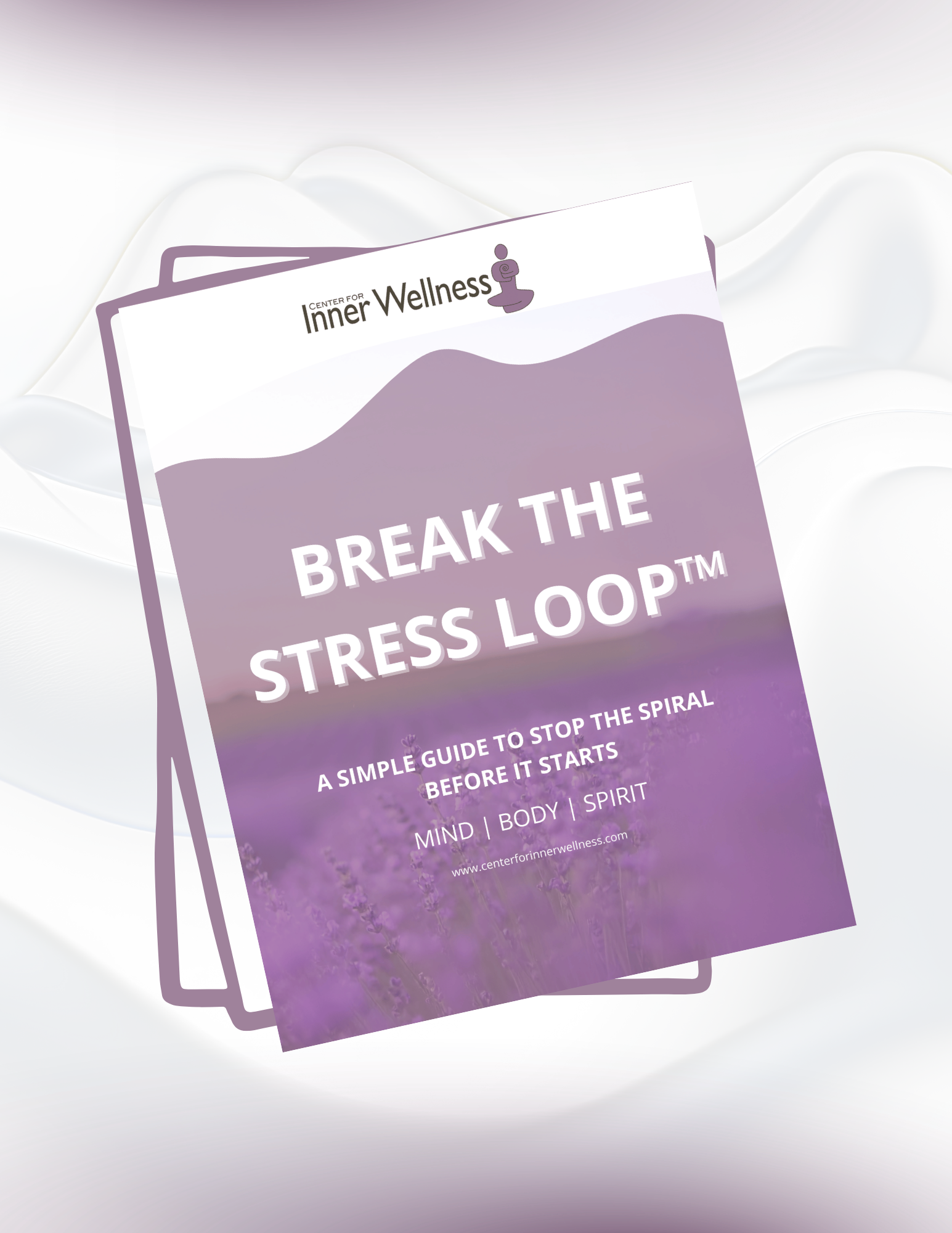
It walks you step-by-step through the early signals of stress and what to do when you catch them.
Here’s to steadiness, clearer choices, and learning to trust yourself again.
