
What If the Problem Isn't a Lack of Willpower?
You know there's something you want to change. Maybe you've even told yourself, This time I'm really going to do it. And then somehow you find yourself right back in the same reaction, habit, avoidance, or behavior you were determined to change.
Maybe you've tried so many times that you've started wondering if the problem is just you. Why can't I just do this? Why don't I have more discipline? I know better.
So you make another promise to yourself. This time I'll stick with it. This time I won't react that way. This time I'll follow through. You decide to try even harder. Be more disciplined.
But then, at some point, you find yourself doing the same old thing again. And you don't just get frustrated that you haven't been able to change it. You start getting disappointed in yourself. After enough times of not doing what you said you were going to do, it can become harder to trust yourself.
But what if it's not really about trying harder?
We're not always consciously aware of what's influencing what we do. There may be underlying thoughts, feelings, or beliefs at work. And when we've responded a certain way over and over, that response can become automatic and kick in before we've had time to consciously think about it.
That's why trying harder may not be the answer. You can know exactly what you want to do and genuinely want to change it. But a conscious decision alone may not be enough to change an automatic response.
So instead of asking, Why can't I ever stop doing this? what if you got curious and asked instead:
What's keeping this going?
Maybe something about the situation brings up an old feeling or reaction. Maybe you've learned to respond this way over time. Maybe it's a combination of things.
Once you understand more about what's underneath the response, you can approach change differently.
There isn't one answer that fits everyone
Two people can be dealing with what looks like the same problem, but for completely different reasons. That's why there isn't one approach that works the same way for everyone.
When I work with a client, we start by understanding what's going on for that person and identifying what needs attention. Hypnosis is an important part of that process because it gives us a way to work with thoughts, beliefs, and responses that may be happening outside conscious awareness, rather than relying on willpower alone.
And because no two people are alike, the process is individualized to what that person is experiencing.
The goal isn't to fight yourself harder. It's to understand what's getting in the way and work with that instead.
If you've been struggling to make a change and wondering whether hypnotherapy might help, let's have a conversation: Discovery Call
If you recognize this cycle in yourself, the free Break the Stress Loop™ Guide is a good place to start. It helps you understand what may be happening when your mind starts speeding up, and gives you a few simple tools to help you come back to a steadier place.
Break the Stress LoopTM
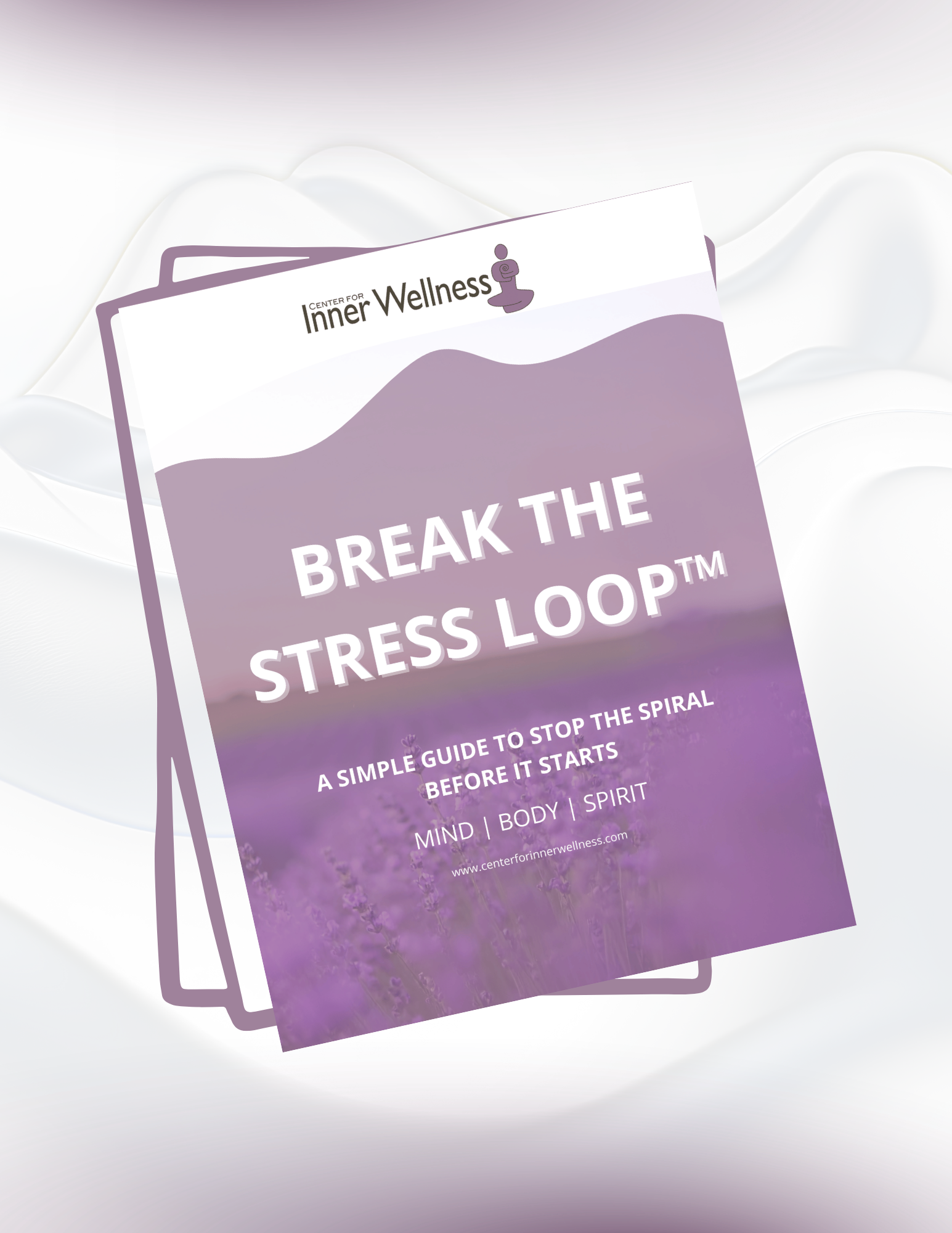
It walks you step-by-step through the early signals of stress and what to do when you catch them.
