
The Stress Loop Behind Second-Guessing: Why Self-Trust Gets So Hard
Have you ever made a decision, felt reasonably settled about it, and then started questioning it later? Maybe it was a text you sent, something you said in a conversation, or a choice you had already thought through. At first, it seemed fine. Then your mind started circling back.
You replay what you said. You wonder if you missed something. You start asking yourself whether it was really the right choice. The more you try to get clear, the less clear you feel.
A lot of people assume this means they don’t trust themselves. They tell themselves they’re indecisive, overly emotional, or just bad at making decisions. But often, that’s not what’s actually going on.
What feels like a self-trust problem is often a stress response.
When stress is active in the body, your system shifts into a different mode. Instead of feeling settled, it starts scanning. It looks for what might be wrong, what might have been missed, and what might need to be corrected. That can make even a simple decision feel loaded.
This matters because people often interpret that state as a personal weakness. They think, “If I were stronger, wiser, or more confident, I wouldn’t do this.” But often, that’s not the issue. The real issue is that stress makes it harder to access clarity.
This is where the Stress Loop can begin. Stress increases, doubt shows up, the mind starts replaying, and that replay creates more stress. Then the cycle feeds itself. The more you try to think your way out of it, the more you can get pulled into the loop.
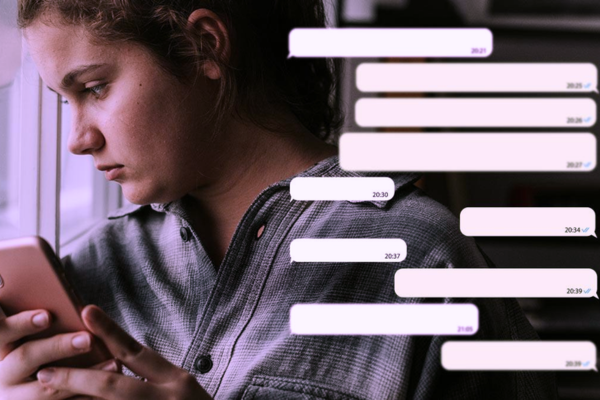
A simple example is sending a text and then reading it over and over a few minutes later. You start wondering how it sounded. You imagine what the other person might think. You consider sending another message to explain or soften what you said. Nothing may have changed on the outside, but inside, the loop is already active.
That’s one reason second-guessing can feel so convincing. It feels like you’re being careful or responsible. It can seem like more thinking will finally get you to certainty. But often, more thinking from a stressed state doesn’t create clarity. It just keeps the stress going.
This is one of the things people usually get wrong. They assume the answer is to analyze more, wait longer, or force themselves to be more certain before acting. But clarity doesn’t usually come from pushing harder, especially when your nervous system is already on high alert. In that state, your system is organized around protection, not ease, perspective, or clarity.

The shift is this: second-guessing is not always a failure of self-trust. Often, it’s a sign your system is under stress.
That doesn’t mean self-trust is gone. It means access to it has been interrupted. When you’re more settled, you can usually feel the difference. You care about the decision, and you want to choose well, but the frantic mental replay is no longer running the show. There is more room inside you. More perspective. More ability to listen to your own internal signals.
So the goal isn’t to force clarity in the middle of the loop. The goal is to come back to the state where clarity is easier to access. Sometimes that begins with something very simple: pausing, slowing the exhale, stepping away from the replay for a few minutes, or noticing that your body is stressed before assuming your decision is wrong.
Over time, this becomes a skill. It’s not about having a perfect personality or never doubting yourself again. It’s about learning to notice when stress is shaping your thinking and knowing how to come back to steady before you decide what something means.
This pattern shows up in more places than people realize. It can happen after conversations, in relationships, at work, and in everyday choices that suddenly start to feel heavier than they need to. Over time, repeated stress loops can make people believe they have lost trust in themselves, when what’s really happening is that stress keeps interrupting access to that trust.
Once you begin to see the pattern, shame tends to loosen. You’re no longer treating yourself like the problem. You’re starting to understand what’s happening in your system, and that makes a different response possible.
If this pattern feels familiar, the next step is learning how the Stress Loop works and how to step out of it.
That’s exactly what I walk through in the Break the Stress Loop™ Guide.
Break the Stress LoopTM
It walks you step-by-step through the early signals of stress and what to do when you catch them.
Here’s to coming back to steady.
